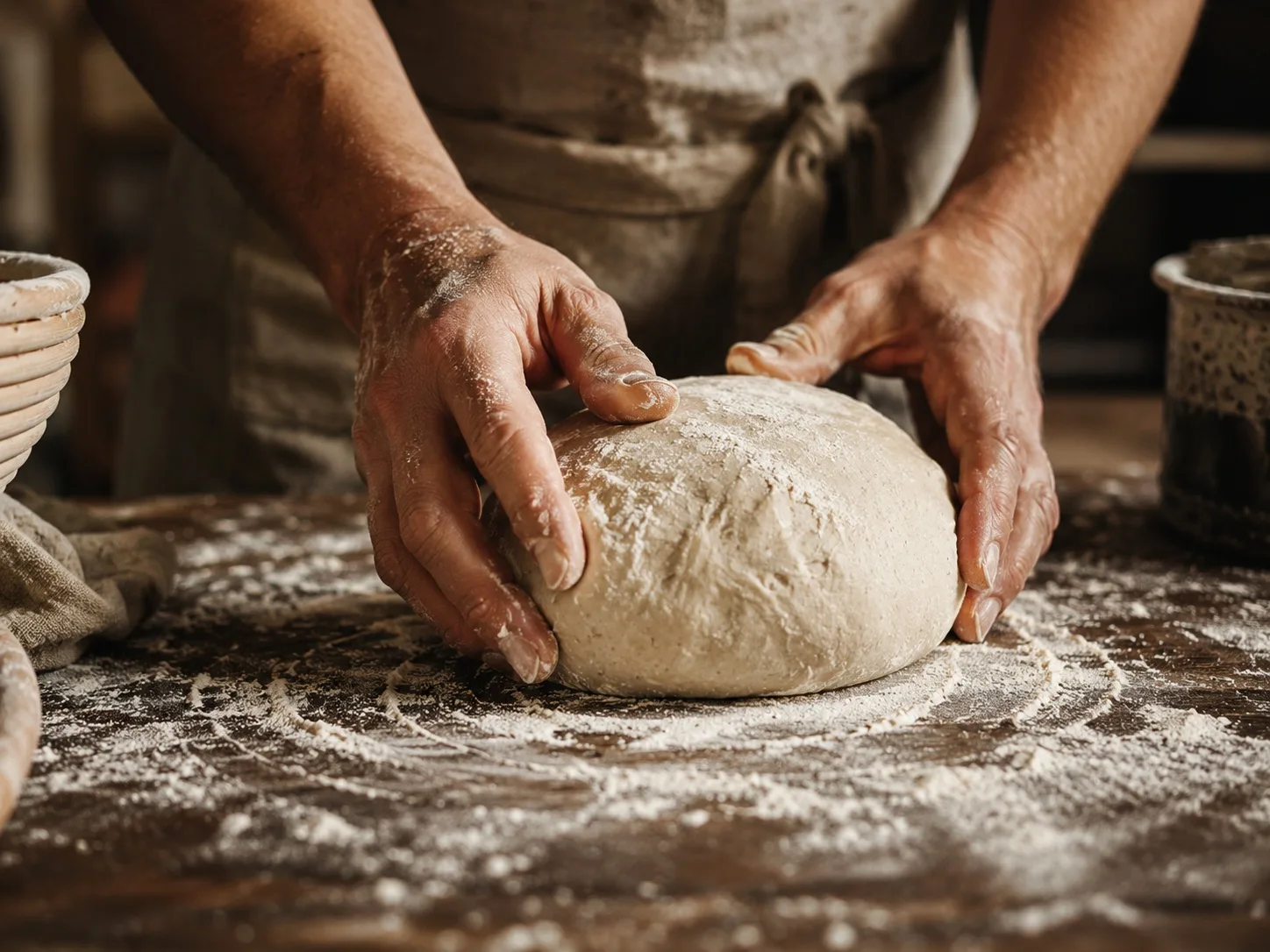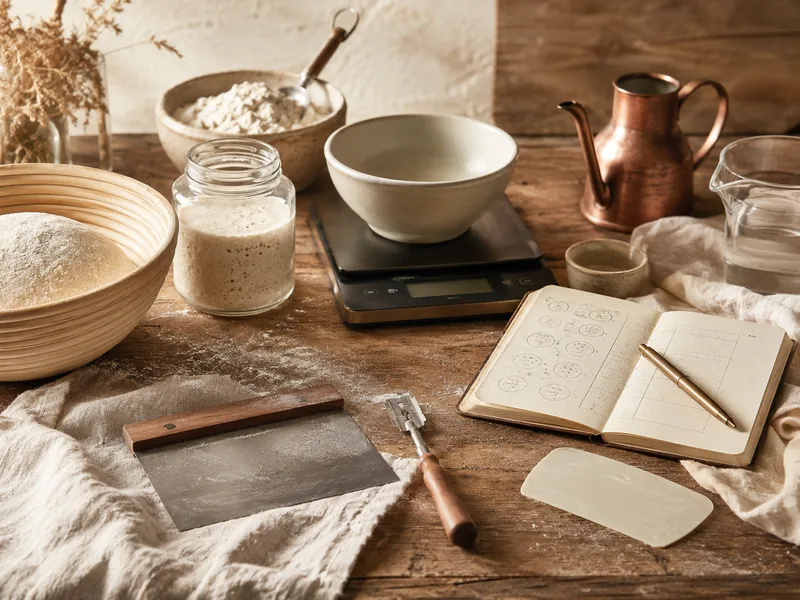
Repeatable dough. Better crust. Cleaner formulas.
Premium pizza dough tools built around hydration, fermentation, and feel.
Hydrate The Crust turns dough science into something practical. Build formulas in grams, compare pizza styles, plan fermentation, and learn the small decisions that create lighter crumb, better browning, and more consistent crust.
Designed to feel like a serious dough brand, not a generic calculator page.
Simple enough for beginners, useful enough for people testing fermentation and hydration windows.
Start with the mix, then learn the handling, proofing, stretching, and baking choices around it.
Tools
The dough lab
Use the core calculators first, then fine tune with the guide and style presets below.
Core formula tool
Dough Hydration Calculator
Sizing tool
Dough Ball Calculator
Fermentation tool
Yeast Planner
Hydration guide
See what hydration does to your dough
The same flour can behave very differently depending on water percentage, time, and temperature.
Great for easier handling, tighter structure, and beginners who want cleaner shaping.
Stronger handling with enough softness for good color and a comfortable stretch.
Airy rim, solid extensibility, and one of the best zones for home pizza progression.
More lift and tenderness, but you need better dough strength and gentler handling.
Best for experienced hands chasing lighter interiors, softer dough, and longer learning curves.
Basic rule
Hydration changes feel before it changes flavor.
Most bakers notice handling first: how sticky the dough feels, how easily it stretches, and how much bench flour it needs.
Important reminder
Time can make a 65% dough feel looser than expected.
Longer fermentation relaxes gluten. That means hydration is only one part of what you feel on the bench.
Practical move
Change one variable at a time.
Raise hydration by 2–3% only, then keep flour, fermentation window, and ball weight steady so you can actually learn.
Formula comparison
Four useful starting points
These are reference formulas, not rigid rules. Load one into the calculator, then adjust based on your oven, flour, and schedule.
Preset
Neapolitan
- Salt2.5%
- Yeast0.20%
- Best forAiry cornicione
- Proof window18–24 hours
Preset
New York
- Salt2.2%
- Yeast0.30%
- Best forBalanced crisp + chew
- Proof window12–24 hours
Preset
Artisan
- Salt2.7%
- Yeast0.15%
- Best forOpen interior
- Proof window24–48 hours
Preset
High Hydration
- Salt2.8%
- Yeast0.10%
- Best forLight, soft, delicate dough
- Proof window24–72 hours
Tips
Basic tips and expert tips
Learn the fundamentals first, then stack the more advanced tweaks after your dough is already consistent.
Basic tips
Build a better baseline
- Weigh everything in grams instead of using cups.
- Start around 60–65% hydration before pushing higher.
- Rest the dough after mixing so gluten can begin organizing.
- Ball the dough evenly so every pizza bakes at the same pace.
- Use less bench flour than you think; extra flour can toughen the bottom.
- Change one variable at a time so your results mean something.
Expert tips
Push quality without guessing
- Autolyse can improve extensibility, especially when hydration climbs.
- Target dough temperature after mixing if you want more repeatable fermentation.
- Long cold fermentation can increase flavor while lowering same-day yeast demand.
- If shaping fights back, the dough may be under-rested, not under-hydrated.
- Better browning often comes from fermentation maturity, not just hotter baking.
- High hydration requires stronger dough strength before it requires more flour.
Mixing
Stop mixing when the dough gets smooth and cohesive.
Overmixing can heat the dough and change the fermentation pace before proofing even starts.
Shaping
Keep the outer rim intact.
Press gas toward the edge, but do not fully flatten the perimeter if you want a lighter crust ring.
Baking
Preheat longer than you think.
A steel or stone that is truly saturated gives you more bottom color and better oven spring.
Workflow
A clean dough workflow from mix to bake
Use this as the default process until you have enough reps to start tailoring it.
Mix
Combine ingredients until the dough becomes cohesive and smooth enough to hold structure.
Rest
Give the dough a short bench rest so the gluten relaxes and the dough becomes easier to handle.
Ball
Divide into even dough balls and create surface tension without tearing the skin.
Proof
Allow the dough to ferment until it feels lighter, more extensible, and visibly relaxed.
Stretch
Open the dough gently from the center outward, keeping the rim full of gas.
Bake
Launch onto a fully preheated surface and watch bottom color as closely as top color.
Brand direction
Hydrate The Crust is now positioned like a real premium dough brand.
You now have the tools, guidance, logo styling, favicon, and content structure needed for a serious early-version launch.
FAQ
Common dough questions
Quick answers for the issues most pizza makers run into when they start adjusting hydration and time.
Most people should start between 60% and 65%. It is easier to handle, easier to learn from, and still capable of excellent pizza.
Sticky dough can come from underdeveloped gluten, warm dough temperature, overproofing, or flour that cannot absorb as much water as expected.
Not immediately. Try resting it first, use wet or lightly floured hands, and check whether the dough simply needs more structure or a shorter proof.
Usually longer than the oven says it is ready. Forty-five minutes to one hour is a practical starting point for stronger bottom color.
Yes. If you move into a colder, longer fermentation, reduce yeast and track the dough's feel instead of relying only on the clock.